

Everything You Need to Know About Root Canals (Before It’s Too Late!)
Late at night, a sudden toothache can quickly become impossible to ignore as the dull pain grows stronger and even cold water feels sharp. Many people hope it will disappear by morning, but tooth pain rarely leaves on its own and often returns stronger, eventually interfering with daily life.
That is usually when dentists begin conversations about root canal treatment. Patients often arrive with hesitation because they have heard different stories about the procedure. Some imagine complex treatments, while others worry about pain or recovery.
At Shree Vishwa Vande Dental Clinic, dentists frequently meet patients who wish they had understood dental infections earlier. Tooth decay and infection rarely appear overnight. They usually start as small changes that slowly affect the inner structure of the tooth.
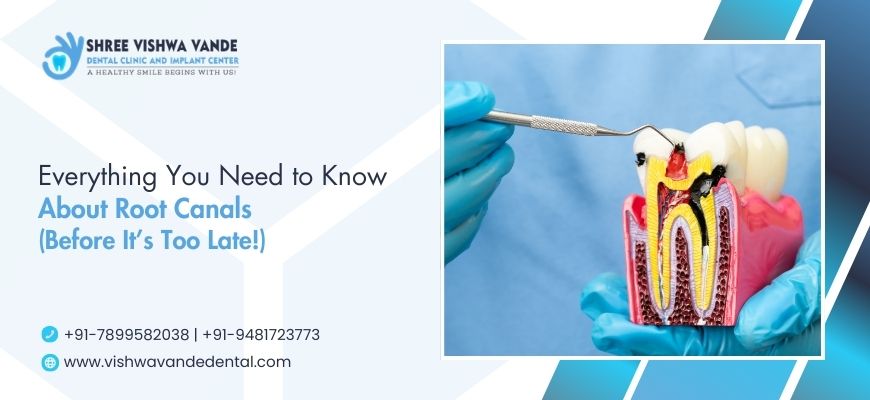
Think of a tooth like a library: the hard enamel protects it, while the inner pulp holds nerves and blood vessels that keep the tooth alive. When bacteria reach this inner space, the tooth sends warning signals, and understanding this early can help people seek treatment before pain becomes severe.
What Happens Inside a Tooth During Infection?
A tooth may appear small, yet it contains several layers that protect its internal structure.
These layers include:
- Enamel – the hard outer surface
- Dentin – the supportive inner layer
- Pulp – the soft center containing nerves and blood vessels
When cavities remain untreated, bacteria gradually travel deeper into the tooth. Once infection reaches the pulp, inflammation begins.
At this stage, the tooth often sends warning signs such as:
- Persistent tooth pain
- Sensitivity to hot or cold foods
- Swelling near the gums
- Discomfort while chewing
The pulp chamber behaves like a small room with very limited space. When infection triggers swelling inside that chamber, pressure builds quickly. That pressure creates the throbbing sensation many patients describe.
Dentists often compare this process to a tightly sealed jar. When pressure builds inside without an outlet, the contents push outward with force.
Root Canal Treatment: Understanding the Goal
The purpose of root canal treatment is to remove infection from inside the tooth while preserving the outer structure. Dentists aim to eliminate bacteria and protect the tooth from further damage.
The procedure usually follows several careful steps:
- The dentist numbs the tooth to ensure comfort.
- A small opening allows access to the infected pulp.
- The dentist gently removes infected tissue.
- Special instruments clean and shape the root canals.
- A biocompatible material fills the cleaned space.
- The dentist seals the tooth to prevent reinfection.
This process removes the source of pain while preserving the natural tooth.
Dentists at Shree Vishwa Vande Dental Clinic often explain that the procedure focuses more on infection control than tooth removal. Saving the natural tooth usually offers better long-term function than extraction whenever possible.
Signs That Often Lead to Root Canal Treatment
Teeth rarely remain silent during infection. They usually provide subtle hints long before severe pain begins.
Some common signals include:
- Lingering sensitivity after drinking hot beverages
- Pain while chewing or biting
- Darkening of a tooth
- Gum tenderness around one tooth
- Occasional swelling near the gum line
Many patients notice these symptoms for weeks before scheduling a dental visit.
Imagine noticing a small crack in a window. At first, it appears harmless. Over time, temperature changes and pressure can cause that crack to expand across the glass. Dental infections follow a similar pattern. Early intervention prevents deeper complications.
Why Delaying Treatment Often Worsens the Situation?
Many people delay dental care because they hope the discomfort will fade.
Unfortunately, dental infections rarely resolve without treatment. Bacteria can spread beyond the pulp chamber and affect the surrounding bone and tissues.
Untreated infections may lead to:
- Abscess formation
- Increased swelling
- Bone damage around the tooth
- Persistent pain
The infection may also travel through tiny canals within the root system. These canals resemble narrow tunnels that connect the pulp chamber to surrounding tissues.
Once bacteria enter those spaces, they become difficult to control without professional care.
Dentists often remind patients that dental infections behave like weeds in a garden. Ignoring them rarely makes them disappear. Removing them carefully prevents further spread.
Modern Techniques Make Root Canal Treatment Comfortable
Many patients still associate root canal procedures with discomfort. Modern dentistry has changed that experience significantly.
Today’s techniques emphasize patient comfort through:
- Local anesthesia
- Precision dental instruments
- Digital imaging
- Advanced infection control methods
Dentists now perform root canal procedures with far greater accuracy than in the past.
At Shree Vishwa Vande Dental Clinic, dentists often reassure patients that the procedure feels similar to receiving a routine dental filling. Most discomfort usually comes from the infection itself rather than the treatment.
Modern technology allows dentists to clean root canals more thoroughly while protecting surrounding tissues.
Life After a Root Canal
After infection removal, the tooth continues functioning normally.
Dentists usually recommend placing a dental crown over the treated tooth to restore strength and durability. The crown acts like a protective helmet that shields the tooth from everyday chewing pressure.
Patients often resume normal eating habits within a short period.
Maintaining the treated tooth involves simple daily habits:
- Brushing twice daily
- Flossing regularly
- Scheduling routine dental checkups
A treated tooth can last for many years when patients follow these habits.
FAQs
1. What is root canal treatment, and why do dentists recommend it?
Dentists recommend root canal treatment when infection reaches the inner pulp of a tooth. The procedure removes infected tissue, cleans the root canals, and seals the tooth to prevent further bacterial growth. This treatment allows dentists to preserve the natural tooth rather than extract it. Clinics such as Shree Vishwa Vande Dental Clinic use modern techniques to ensure comfort during the procedure. Early treatment helps relieve pain and protect surrounding oral structures.
2. Is root canal treatment painful?
Most patients experience relief rather than pain during the procedure because dentists use effective local anesthesia. The infection inside the tooth usually causes the discomfort that patients feel before treatment. Once the dentist removes the infected pulp, the pressure inside the tooth decreases significantly. Modern dental tools allow precise and gentle cleaning of the root canals.
3. How long does a root canal procedure take?
The duration of treatment depends on the complexity of the infection and the number of root canals within the tooth. Some teeth require only one appointment, while others may need two visits for thorough cleaning and sealing. Dentists evaluate the tooth through digital imaging before planning the procedure. Careful treatment ensures that all infected tissue is properly removed. This approach supports long-term success.
4. Can a tooth survive long after root canal treatment?
A properly treated tooth can function for many years with good oral hygiene and regular dental checkups. Dentists often place a crown over the tooth to protect it from fracture during chewing. The crown restores strength while maintaining a natural appearance. Patients should continue brushing, flossing, and attending dental visits to maintain oral health. Long-term success depends on consistent dental care and healthy habits.
Listening to the Signals Your Teeth Send
Teeth rarely become infected without warning. Small signals often appear long before severe pain begins.
Sensitivity, swelling, or mild discomfort can act like quiet reminders that something inside the tooth requires attention.
Dentists at Shree Vishwa Vande Dental Clinic often observe that patients feel surprised by how manageable treatment becomes once they address the issue early.
Understanding root canal treatment at Shree Vishwa Vande Dental Clinic helps patients approach dental care with confidence rather than fear.
And sometimes, responding to that first small signal from a tooth may prevent a much louder message later.


Quick Links
Useful Links
Get In Touch!
- #UGF :24-25, Above Hubli Scan center, Eureka Junction, near Old Court Circle, Deshpande Nagar, Hubli, Karnataka 580029, India
- +91-7899582038 | +91-9481723773
- smile@vishwavandedental.com
Get directions on the map
© Copyright
Shree Vishwa Vande Dental Clinic
All Rights Reserved. | Powered By 