

How To Treat Tooth Decay At The Gum Line?
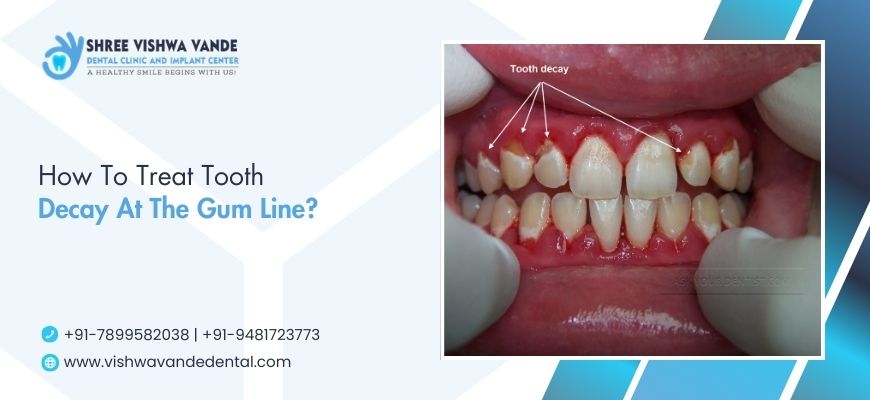
You notice something strange one morning while brushing your teeth. A faint brown shadowed line hugs the edge of your tooth, right where the gum meets the enamel. You bring your head closer to the mirror. You brush harder. It doesn’t go away. By evening, cold water sends a tiny zing through that same spot.
Suddenly, the question starts looping in your mind: What is this, an infection, a cavity, or a disastrous tooth decay? Oh Lord, have mercy!
Patients ask this almost daily at Shree Vishwa Vande Dental Clinic as: how to treat tooth decay at the gum line. Not because the problem looks dramatic, but because it feels sneaky. The arrival of gum line issues is always unforeseen. They whisper first. A stain. A sensitivity. A “maybe it’s nothing” moment.
And that’s exactly why they deserve attention early.
Let’s walk through what’s really happening there, and why timing matters more than most people realize.
Why Does The Gum Line Feel Like A Trouble Zone?
The gum line sits at an awkward border. It doesn’t enjoy the full protection of thick enamel like the top of your tooth. Near the root of the tooth, the surface consists of two layers: cementum and dentin, which remain softer and more vulnerable.
Think of it like the edge of a notebook page. The center stays strong, but the corners fray first.
Food particles, plaque, and bacteria love this edge. Your toothbrush sometimes misses it. Flossing sometimes gets rushed. Over time, acids settle in and slowly erode the surface.
That’s how tooth decay at the gum line begins. Quietly. Gradually. Almost politely.
Until one day it isn’t.
Signs Most People Ignore At First
These early clues often slip under the radar:
- A dark line near the gums
- Sudden sensitivity to cold or sweets
- Slight gum recession
- Roughness when you run your tongue across the tooth
- Bleeding while brushing
None of these screams “emergency.” So people wait.
But gum line decay behaves like a slow leak in a ceiling. Ignore it long enough, and the small stain turns into a bigger repair.
At Shree Vishwa Vande Dental Clinic, many patients say, “I thought it was just staining.” That misunderstanding delays simple treatment and turns it into something more involved.
Understanding How To Treat Tooth Decay At The Gum Line?
Before talking about treatment, let’s clear one thing. This type of decay doesn’t heal on its own. Once bacteria damage the tooth surface, professional care stops it.
Dentists choose the approach based on how deep the cavity travels. Each stage needs a slightly different strategy.
1. Early enamel or root surface damage
If the decay stays shallow, your dentist may recommend:
- Professional cleaning
- Fluoride application
- Desensitizing agents
- Better home care techniques
Fluoride strengthens the weakened surface and slows further breakdown. Catching it here feels like patching a tiny tear before the whole fabric splits.
2. Small cavities near the gum line
Once a cavity forms, dentists remove the damaged area and place a tooth-colored filling.
This step often takes one visit. The procedure stays quick and comfortable. Modern composite materials bond well to root surfaces and blend naturally.
Many patients feel surprised by how simple this stage feels. The appointment usually finishes faster than a haircut.
3. Deeper root involvement
If decay reaches deeper dentin or approaches the nerve, your dentist may suggest:
- Root surface decay treatment with a larger restoration
- Sometimes, a root canal is necessary if infection reaches the pulp.
- A crown for added strength
At this point, the tooth needs more support. Consider reinforcing a weakened wooden step before it cracks under load.
Acting early usually prevents this stage altogether.
Why Does Gum Recession Make Things Worse?
Gums sometimes pull back due to:
- Aggressive brushing
- Gum disease
- Aging
- Tobacco use
When a recession exposes the root, the tooth loses its protective enamel shield. The root surface decays much faster.
It’s similar to leaving fruit peeled on the kitchen counter. It dries and spoils faster than fruit with skin intact.
That’s why dentists often address both problems together. Treating the cavity without improving gum health invites the same issue back.
Good treatment always looks at the whole environment, not just the hole.
What Actually Happens During Gum Line Cavity Treatment?
Patients often imagine long, complicated procedures. In reality, most treatments feel straightforward.
Here’s what usually happens:
- The dentist numbs the area (if required)
- Removes decayed tissue
- Cleans the surface thoroughly
- Places a filling or restoration
- Shapes it to match your bite
You leave the clinic the same day and eat normally within hours.
At Shree Vishwa Vande Dental Clinic, dentists also teach brushing angles and flossing techniques so the problem doesn’t repeat. That education often matters more than the filling itself.
Treatment fixes today. Habits protect tomorrow.
Small Daily Habits That Make A Big Difference
Prevention stays surprisingly simple.
You don’t need fancy gadgets. Just consistency.
- Use a soft-bristle brush.
- Brush gently at a 45-degree angle toward the gums
- Floss daily
- Rinse after meals
- Visit your dentist every six months.
- Limit frequent sugary snacks.
These steps protect the gum line like an umbrella during a drizzle. No drama. Just steady protection.
Why Early Care Saves Time, Money, And Stress?
Most people delay dental visits because life feels busy.
But gum line decay rarely stays small. It spreads sideways and downward. What begins as a minor filling can turn into a root canal or crown if ignored.
You wouldn’t ignore a tiny crack in your phone screen. You fix it before the whole display shatters.
Your tooth deserves the same logic.
Starting early keeps treatment lighter, faster, and less expensive.
FAQs
1. How to treat tooth decay at the gum line?
Dentists treat gum line decay based on depth and severity. Early stages respond well to professional cleaning and fluoride applications that strengthen the surface. Small cavities require tooth-colored fillings that restore shape and function. Deeper decay may need root canal therapy or crowns for protection. A dental examination always determines the safest and most effective plan.
2. What causes tooth decay at the gum line?
Plaque buildup, poor brushing technique, and gum recession often trigger decay near the gum line. Exposed root surfaces lack strong enamel, so acids damage them faster. Frequent snacking or sugary drinks accelerate the process. Inconsistent flossing allows bacteria to settle at the margins. Regular check-ups help catch these issues early.
3. Is a dark line near gums always a cavity?
Not always. Staining, tartar, or minor pigmentation can also create a dark line near the gums. However, sensitivity or rough texture alongside discoloration may indicate decay. Only a dentist can confirm the cause through examination and X-rays. Ignoring the spot without checking can allow hidden damage to grow. Early evaluation removes guesswork.
4. Does gum line cavity treatment hurt?
Patients usually feel only slight pressure during cleaning or filling placement. Mild sensitivity may occur for a day or two afterward. Soft foods typically manage this easily. Many people say the anxiety feels worse than the actual procedure.
Early Caution Is Better Than a Cure…
Gum line decay rarely shouts for attention. It taps you softly on the shoulder. A twinge. A stain. A rough edge.
Listen early, and everything stays simple.
Ignore it, and the story grows longer.
If you’ve noticed a dark line near your gums or any changes and keep wondering how to treat tooth decay at the gum line, don’t wait for discomfort to decide for you. A quick consultation at Shree Vishwa Vande Dental Clinic can clarify what’s happening and guide you toward the right solution before things escalate.
Sometimes the smallest steps protect the strongest smiles.


Quick Links
Useful Links
Get In Touch!
- #UGF :24-25, Above Hubli Scan center, Eureka Junction, near Old Court Circle, Deshpande Nagar, Hubli, Karnataka 580029, India
- +91-7899582038 | +91-9481723773
- smile@vishwavandedental.com
Get directions on the map
© Copyright
Shree Vishwa Vande Dental Clinic
All Rights Reserved. | Powered By 